
Introduction to What is Digital Marketing?
Did you know that over 5 billion people use the internet every single day? That’s more than half the world’s population scrolling, searching, clicking and buying. Now here’s the real question: is your brand showing up for any of them?
If you’ve ever wondered what is digital marketing actually, beyond the buzzwords, you’re in the right place. Let’s break it down, simply and honestly.
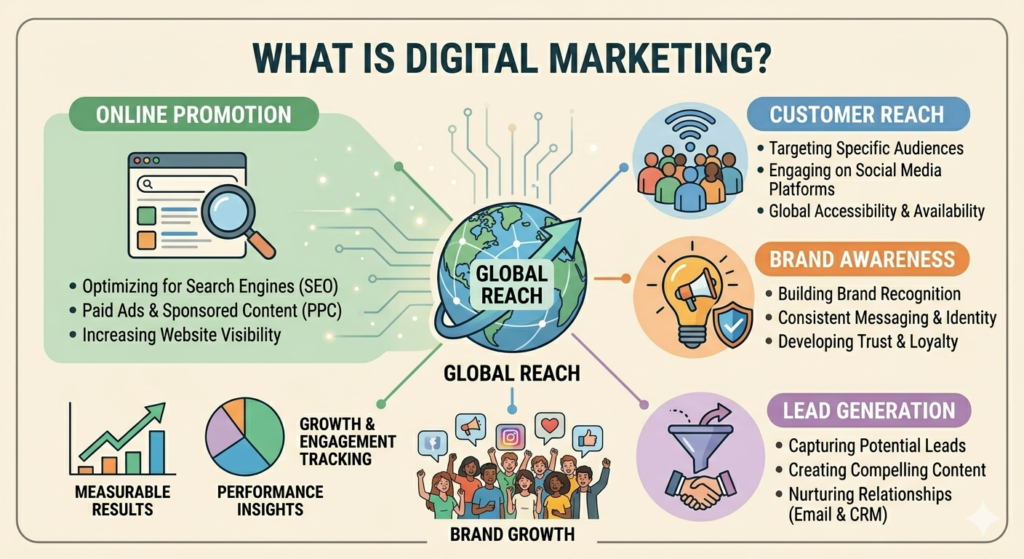
Why Is Digital Marketing Important?
Imagine opening a shop in the middle of a busy city but keeping all the lights off. People walk past, but no one notices you exist. That’s what running a business without digital marketing feels like.
Digital marketing puts the lights on. It connects your brand to the people who are already looking for what you offer at the right time, on the right platform, without needing a massive budget to compete.
Here’s why it matters:
- You reach audiences far beyond your local area – across cities, countries, even continents
- Every rupee you spend is trackable – unlike a newspaper ad, you know exactly what’s working
- You can speak directly to your ideal customer not everyone, just the right ones
- Small businesses can compete with big brands – strategy beats budget here
- You can adjust campaigns in real time
- You meet customers wherever they are from discovery to purchase
How Does Digital Marketing Work?
Think of what is digital marketing as a journey your customer takes from not knowing you exist to becoming a loyal buyer. Your job is to show up at every step of that journey.
It starts with defining your goal. Are you building awareness, generating leads, or driving sales? Once you know where you’re going, you identify who you’re talking to, choose the right channels, and create content that speaks directly to their needs.
The key is consistency and being willing to refine what isn’t working.
Challenges in Digital Marketing
When I started working in digital marketing, it felt exciting so many platforms and opportunities to grow a brand online. But as I got into real campaign work, I realized it also comes with its own challenges.
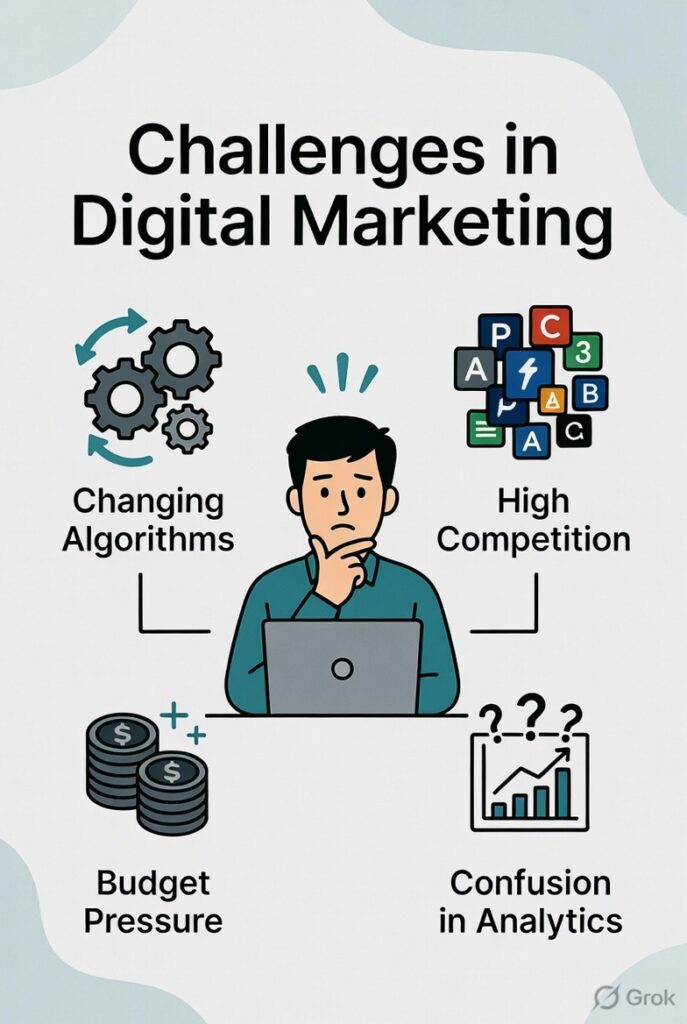
One of the biggest things I noticed was how fast everything changes. Platforms like Google and Instagram keep updating their algorithms. I’ve seen posts that performed really well one day suddenly stop getting reach. That’s when I understood the need to constantly learn, adapt and update strategies. Competition is another challenge. Today, almost every business is available online, which makes it harder to stand out. Just being present is not enough but you need to be clear, consistent and different in how you communicate.
Building trust also takes time. People don’t instantly trust brands online. They observe, compare and engage before making a decision. That’s why showing real value and staying consistent is important.
Budget management is something I’ve seen many businesses struggle with. Some overspend without a clear plan, while others expect results without investing enough. Over time, I learned that it’s not about spending more but spending smartly.
Measuring results can also feel confusing, especially in the beginning. Not everything gives instant results. SEO takes time and awareness campaigns don’t always lead to immediate sales, which can make it harder to track what’s working.
Lastly, data privacy has become important. Customers are more aware of how their data is used, and as marketers, we need to be transparent and responsible.
What I’ve learned through all of this is simple, challenges are part of the process. With the right approach and patience, they become learning experiences that help you grow.
Types of Digital Marketing
When we talk about digital marketing, it’s not just one single activity. It’s a combination of different methods that work together like a system.
I like to explain it this way: If your business is like a store, digital marketing is everything that helps people find you, trust you, and finally choose you.
Let’s understand this in a more practical and relatable way.
1. Search Engine Optimization (SEO) | What is SEO in Digital Marketing? – The Complete Beginners Guide
Think about the last time you searched something on Google, maybe “best interior designer near me” or “affordable skincare products.”
Have you noticed how you usually click on one of the first few results?
That’s exactly where every business wants to be and SEO is what helps you get there without paying for ads. It begins with understanding what people are searching for (keywords). Based on that, your website content is created in a way that answers those queries clearly. Over time, Google reads your website, understands it and starts showing it to the right audience.
SEO works in three main ways:
- On-page SEO: Your content, keywords, headings, images
- Off-page SEO: Other websites linking back to you (backlinks)
- Technical SEO: Website speed, mobile-friendliness, structure
It doesn’t give instant results, but once it starts working, it brings consistent traffic without paying for every click.
2. Social Media Marketing
Now think about platforms like Instagram or LinkedIn. People are not searching here they are just scrolling. This is where social media marketing works differently.
Here, your goal is not just to sell, but to show up regularly, share your story and build a connection. For example, if you’re a real estate brand, you might share property videos, client experiences or helpful tips.
Over time, something interesting happens:
- People start seeing your content
- They engage with it
- They begin to recognize your brand
- And slowly, they start trusting you
It’s not instant but it’s powerful because it builds a long-term relationship with your audience.
3. Performance Marketing (Google Ads & Meta Ads)
Now let’s say you want faster results.
You search “buy running shoes online” and the first few results you see are ads that’s performance marketing.
Behind the scenes, a business has:
- Selected the right audience (based on location, interests or keywords)
- Created ads (text, image, or video)
- Set a budget
These ads are then shown to people who are most likely to be interested. The biggest advantage? You can start getting results quickly
But I’ve also seen that without the right strategy, it’s easy to spend money without getting results. So, it needs to be planned carefully.
4. Content Marketing
Content marketing is something you experience every day even now, as you’re reading this blog.
Instead of directly selling, the idea here is simple to help first and sell later
For example:
- Someone has a question – they search online
- They find your blog or video
- They learn something useful
- They start trusting you
And when they’re ready to take action, they remember you.
This is why content marketing is so powerful it builds trust and authority over time.
5. Email & WhatsApp Marketing
Not everyone decides immediately. Sometimes people need time, reminders or more information.
Let’s say someone visits your website but doesn’t take action. Through email or WhatsApp, you can:
- Send them helpful updates
- Share offers
- Remind them about your services
This way, you stay connected even after the first interaction. Over time, this increases the chances of them coming back and choosing you.
6. Influencer & Affiliate Marketing
Sometimes, instead of promoting your brand yourself, you let others do it.
For example, when you see a creator recommending a product — that’s influencer marketing. People trust these recommendations because they feel real and relatable.
In affiliate marketing, someone promotes your product and earns a commission for each sale they bring. This works because people often trust people more than direct ads.
7. Marketing Automation
As your business grows, managing everything manually becomes difficult. Automations come in picture here.
For example, if someone fills a form on your website, they instantly receive a message or email. You can also set automatic follow-ups or track customer actions without doing everything manually. This ensures you don’t miss potential customers and saves time
If you look closely, all these types are connected. One helps people discover your brand, another builds trust and another helps convert them into customers.
That’s how digital marketing works not as separate activities, but as a complete journey.
Digital Marketing Trends for the Future
Digital marketing is always changing, and if you notice closely, you’re already experiencing these changes in your daily life.
Think about how many times you’ve chatted with a website and got an instant reply that’s AI and automation at work. Businesses today use tools that can respond to customers, suggest ideas, and even run campaigns faster and smarter.
You might have also noticed how ads feel very personal almost like they understand what you’re looking for. That’s because of personalization. Brands are no longer sending the same message to everyone; they are tailoring it based on your interests and behaviour.
Another big shift is how people search. Instead of typing, many of us now say things like “best cafes near me” on our phones. This is voice search and it’s changing the way content is created making it more natural and conversational.
Content itself is also becoming more interactive. Instead of just reading or watching, you’re now answering polls, watching reels, or joining live sessions. This is interactive content, and it keeps people more engaged.
At the same time, people are becoming more aware and conscious. They prefer brands that are honest and real. This is where ethical and transparent marketing comes in building trust by being genuine and responsible.
At the end of the day, digital marketing is not just about new tools or trends. It’s about creating better, more meaningful experiences for people.
Examples in Digital Marketing
1.Nykaa – From Low Visibility to Top Search Results
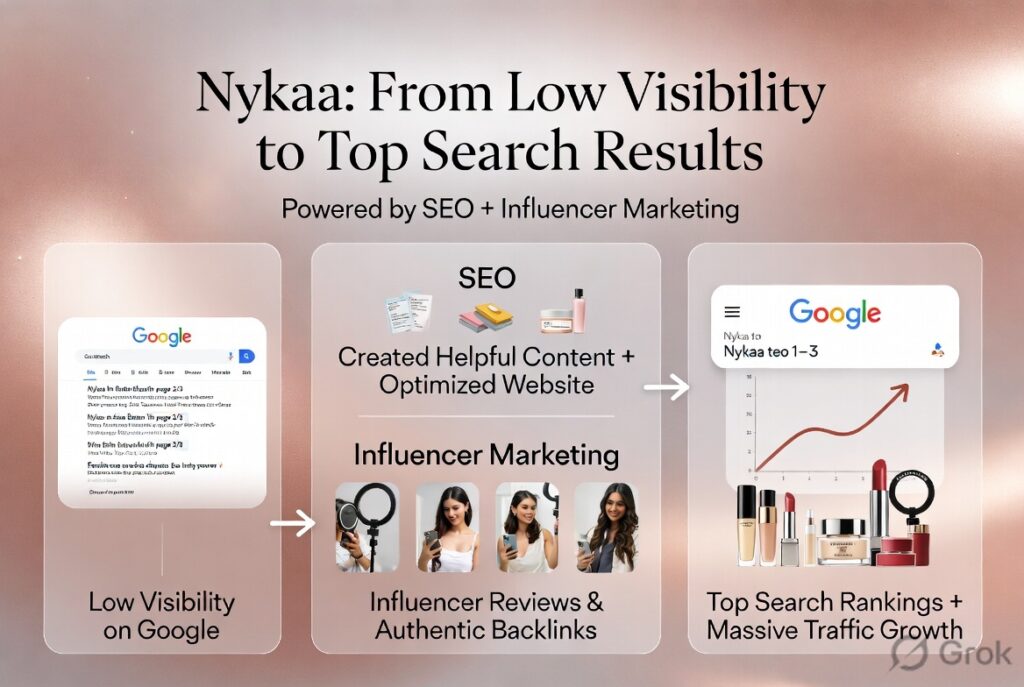
Nykaa, one of India’s biggest beauty and skincare platforms, wasn’t always as visible as it is today. In the beginning, one of their biggest challenges was that when customers searched for beauty products on Google, Nykaa wasn’t showing up on the first page of Google.
To solve this, Nykaa focused heavily on Search Engine Optimization (SEO). Instead of just selling products, they started creating useful and detailed content around what people were searching for — like skincare routines, makeup tips, and product guides. This helped Google understand their website better and start showing their pages in search results.
They also made sure their website was:
- Easy for Google to read and understand
- Filled with original and helpful content
- Regularly updated their content
At the same time, Nykaa smartly used influencer marketing. Beauty bloggers, YouTubers, and influencers started reviewing products and linking back to Nykaa’s website.
This did two important things:
- Built trust among customers
- Increased their website authority in Google’s eyes
Slowly, Nykaa’s pages started ranking higher and eventually, they began appearing in the top 3 results for hundreds of keywords.
2. Titan Watches – From Retail Decline to Digital Growth
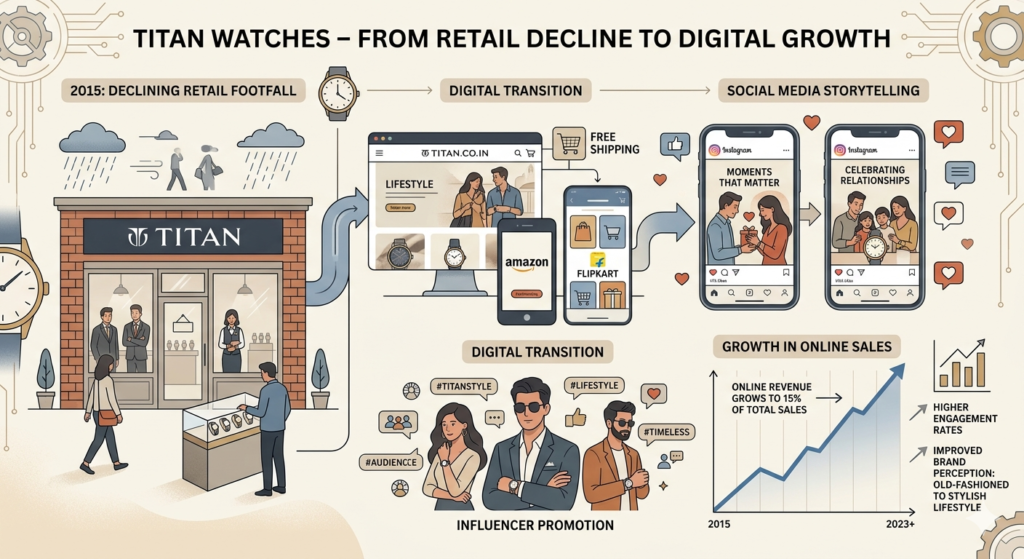
Around 2015, Titan faced declining store sales due to the rise of smartphones. Fewer people were visiting stores and the brand needed a new approach.
They shifted to digital by launching their own website and partnering with platforms like Amazon and Flipkart. On social media, instead of product ads, they focused on emotional storytelling, connecting watches with real-life moments like relationships, milestones, and memories. This made their content more relatable and engaging. They also used influencer marketing, where lifestyle creators showcased their watches in everyday use.
As a result:
- Their engagement rates increased significantly
- Online revenue grew from almost zero to around 15% of total sales
- Brand perception changed from “old-fashioned watches” to a stylish lifestyle product
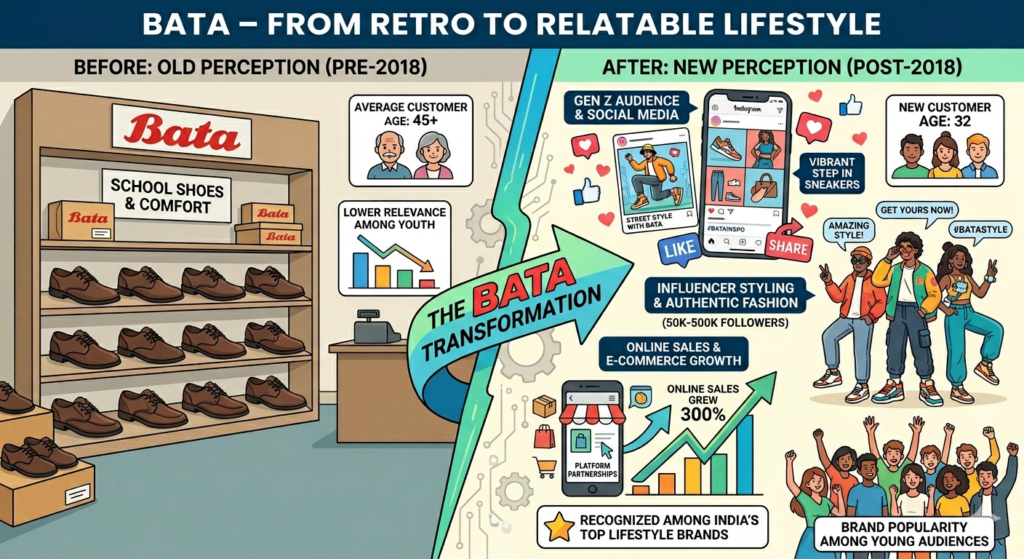
3. Bata – From “Old Brand” to Gen Z Favourite
Bata was once seen as an old-fashioned brand, mainly associated with school shoes and older generations. By 2018, it was losing relevance among younger audiences.
To change this, Bata revamped its social media presence with modern, stylish content and lifestyle-focused visuals.
They also worked with micro-influencers (with 50K–500K followers), who created authentic fashion content using Bata products, making the brand feel more relatable.
Additionally, they strengthened their online presence by improving their website and listing products on platforms like Myntra.
The results were clear:
- Average customer age dropped from 45 to 32
- Online sales grew by 300%
- Brand became popular among younger audiences
- Bata was recognized among India’s top lifestyle brands
Conclusion
At the end of the day, what is digital marketing really about? It’s not just about tools or platforms it’s about understanding people.
What they search, what they like, what they trust, and how your brand can connect with them in the right way. Whether it’s ranking on Google, running ads, or building your presence on social media, every step you take online adds up to your growth.
You don’t need to do everything perfectly from the beginning. You just need to start with the right direction.
If you want someone to guide you through this journey and help you build a strategy that actually works for your business, I’d be happy to help.
Frequently Asked Questions
1. What is the main goal of digital marketing?
The main goal of digital marketing is to reach the right audience online, increase brand awareness, and generate leads or sales. It helps businesses connect with potential customers through channels like search engines, social media and ads.
2. What problem does digital marketing solve?
Digital marketing solves the problem of low visibility by helping businesses appear where customers are actively searching online. It also improves targeting, ensuring your marketing reaches the right audience instead of a broad, less relevant group.
3. What is the difference between traditional marketing and digital marketing?
The difference between traditional and digital marketing is that traditional marketing uses offline channels like TV and newspapers, while digital marketing uses online platforms like Google and social media. Digital marketing is more measurable, cost-effective and allows precise audience targeting.
4. How do I choose the right digital marketing service?
To choose the right digital marketing service, first identify your business goal such as brand awareness, leads, or sales. Then select SEO for long-term growth, paid ads for quick results, or a mix of both for better performance.
5. Which type of digital marketing is best for beginners?
The best types of digital marketing for beginners are content marketing and social media marketing because they are easy to start and help build basic understanding. SEO is also useful for long-term growth, while paid ads can be learned gradually.
Great breakdown, Mahima! I especially loved the point on looking for multi-channel expertise rather than just isolated skills—integrated funnels really make all the difference for modern businesses.
I’m Yash Shodhan, an AI + Performance Marketing Professional based in Bangalore, focusing on driving high-intent lead generation and measurable growth.
I’d love to connect or explore a backlink exchange opportunity with my site if you’re open to collaborating on digital marketing insights!
Really enjoyed reading this article! I especially liked how you explained digital marketing in a simple and relatable way, while covering everything from SEO and social media to performance marketing, content, and automation. The idea of digital marketing being a complete customer journey rather than a collection of separate activities really stood out to me.
I’m Vidhi, a digital marketer with an interest in SEO, paid advertising, social media, and AI & automation. As I’ve been learning and working through different areas of digital marketing, I’ve realised how interconnected these channels are and how much there is to keep learning.
I’ve also written a blog sharing some of my own learnings around SEO In Digital Marketing, especially how SEO contributes to a brand’s visibility and long-term growth. It was interesting to see some of the same ideas reflected in your article from a different perspective.
Looking forward to reading more of your work!